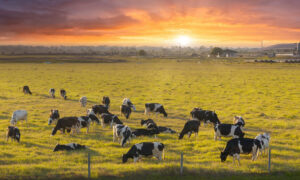
Lentegevare vir Vee
Beskerm Jou Kudde Voordat Probleme Jou Geld Kos Die lente bring nuwe groei, warmer dae en die vooruitsig van beter weiding. Vir veeboere bring die


Fasciolosis (Liver fluke) is one of the most important parasitic diseases throughout the world including, South Africa.
Liver fluke infections in livestock are responsible for economic losses such as:
OVERVIEW OF THE PARASITE
Two types of liver fluke occur in South Africa:
Common liver fluke (Fasciola hepatica), their size is on average 2.5cm long and 1.5cm wide and they are commonly found all over South Africa where conditions are suitable
Giant liver fluke (Fasciola gigantica), their size is on average 5.5cm long and 1.5cm wide. The Giant liver fluke are more found in the northern regions of South Africa
The life cycle of liver fluke is complex and has several stages of development inside and outside the livestock. Liver fluke populations are maintained with the presence of freshwater snails that act as intermediate hosts.
INTERMEDIATE HOST
Freshwater snails (Lymnaea spp.) is well known as the intermediate host of the liver fluke. They prefer habitats with a mean annual air temperature of 10–20 °C and a mean annual rainfall of 600 – 900 mm.
The shape of the shell is elongate ovoid and is colourless or light brown in colour. Size vary between species (The width of the shell is about 5.75–7 mm and the height of the shell is 4.6–19.2mm)
HABITAT
The typical habitat of liver fluke is wet, marshy areas or ponds. It is the ideal habitat for the survival of the freshwater snail. The water must be still or slow moving
Areas where pastures are irrigated can also be conducive to the survival of the parasite
In some cases water reservoirs and troughs can also be a source of the infection
Liver fluke infections in cattle depend on a number of factors:
Successful liver fluke control can be challenging because the number of parasites in the host must be reduced and the fluke population present in the environment.
Effect on the liver
The liver ensures detoxification and excretion of endogenous and exogenous waste. It neutralizes toxic elements from the metabolism (bilirubin, ammonia, ketones) then transforms them into recycled nutrients and expels them via feces or urine
“The liver is an extremely important organ. It provides functions essential for: General health, Vitality, Production, Reproduction.”
The Liver is the largest internal organ and has numerous functions including:
Liver fluke infections cause severe damage in livestock from the time the animal ingest metacercaria (Infectious stage) until it is controlled (or until the adult liver fluke dies and this can take up to two years)
In cattle, about ± 25% of the metacercaria ingested reach the liver within 2 weeks to 85 days after ingestion. In the case of sheep, up to as much as 80% of the metacercaria reach the liver during this time. The rest migrate through the body and cause damage to other organs until the animal eventually dies.
DAMAGE CAUSED BY LIVER FLUKE
Bleeding is caused in the small intestine due to liver fluke damage
The metacercaria are ingested by the animal when grazing and follow the digestive tract until they reach the small intestine. In the small intestine, they bore through the intestinal wall and end up in the body cavity. They migrate back and forth for around two weeks until they reach the liver.
Migrating liver fluke cause necrosis and bleeding spots in the liver
The migrating immature to adult liver fluke stadia in the liver cause haemorrhage and damage to liver tissue, leading to unproductive scar tissue.
Liver fluke infestations cause thickening, calcification and blocking of the bile ducts.
The development from early immature to adult liver fluke stadia in the bile ducts causes irritation to which the body reacts. The bile ducts thicken and may even form a “panhandle” where the bile duct becomes closed off, no longer transporting bile.
Liver Fluke control strategy
There is no quick fix for liver fluke, effective liver fluke control can be a challenge and needs to be addressed throughout the year .
The control strategy should be aimed at both reducing the number of parasites in the host as well as reducing the liver fluke population in the environment.
Research and experience have shown that effective and sustainable control is based on an integrated control program that includes chemical treatment (deworming the animals), pasture/ grazing management, fencing of contaminated areas (if possible) and repairing of leaking troughs.
“For optimal liver health use a STRATEGIC CONTROL STRATEGY throughout the year to LIMIT THE DAMAGE caused by liver fluke”
The Economic Impact
The economic impact of liver fluke can be very substantial. Liver fluke infection causes a reduction in growth rates (ADG), reduced milk production, reduced fertility, liver condemnation at the abattoir, mortalities (deaths) and secondary infections.
IMPACT ON MILK PRODUCTION
In high-risk fluke areas, liver fluke is a significant threat to optimal milk production. The effect of liver fluke on milk is well documented.2
IMPACT ON GROWTH IN CALVES
Liver fluke can affect weight gains (ADG) in all cattle, but especially in young and growing cattle. A heavy infestation of 200 fluke per calf, can cost up to 28,5% in reduced weight gain 4,5 The graph below shows the reduction in body weight expressed as weight loss on calves – depending on the severity of liver fluke infestation2
A reduced growth rate could affect the general development of the calf and can lead to reduced weaning weights or a delay reaching puberty (breeding age). Both these conditions have a major economic impact. With the current weaner price of >R30/kg, a small reduction in weaning weight will mean a big loss in income.
IMPACT ON BODY WEIGHT OF SHEEP
Liver fluke infestations have a 15% impact on food intake that results in poor growth if not controlled.
In this trial : Liver fluke free sheep were dosed with F.hepatica metacercaria for 5 days each week for a period of 22 weeks, there was a tendency of poorer weight gain in the infected groups from week 20.
LIVER CONDEMNATION
The loss of income due to liver condemnations caused by liver fluke infestation, can exceed R100 per animal slaughtered!
CONTROL PROGRAM
Effective liver fluke control can be a challenge! The number of parasites in the host must be reduced as well as the fluke population present in the environment.
Effective, sustainable control must be based on an integrated parasite control program that includes, chemical control (dosing of animals), grazing management, fencing of infected areas (where possible) and the repair of leaking troughs (which reduces the habitat of the intermediate host). The chemical control of freshwater snails through the application of copper sulphate is usually impractical and can be dangerous for the animals!
Timing of liver fluke treatments is one of two key factors for effective liver fluke control. It is based on the following:
Product choice is the second key factor in effective liver fluke control.
By controlling liver fluke as effectively as possible, the damage can be limited. To this end, controlling the early-adult stadia that penetrate the liver and then migrate is critical! Therefore, timeous treatment and the use of effective remedies are of importance.
Use Flukazole C once or twice in the liver fluke control program, especially in areas where liver fluke infections are high. The synergistic combination of Flukazole C’s two active ingredients (triclabendazole and oxfendazole), offers broad-spectrum control that includes:
The benefit of treating your livestock with Flukazole C is confirmed by local and overseas trials. Please contact your Virbac Technical Sales Advisor for more information regarding the confirmation of liver fluke infection on your farm, as well as an appropriate control program.
For more information, or if you have any concerns or need assistance with disease prevention, treatment protocols, or selecting the correct products, don’t hesitate to reach out to our resident livestock vet, Dr. Izak van Rensburg, at:
WhatsApp: 081 031 4694
Email: izakjvr@hotmail.com
Beskerm Jou Kudde Voordat Probleme Jou Geld Kos Die lente bring nuwe groei, warmer dae en die vooruitsig van beter weiding. Vir veeboere bring die
Protect Your Herd Before Problems Cost You Spring brings new growth, warmer days and the promise of improved grazing. For livestock farmers, however, the change
Dit word veroorsaak deur ’n pox virus wat permanente huidskade en skerp dalings in die vrugbaarheid en produktiwiteit van die kudde veroorsaak. Hoe kan jou
It is caused by a poxvirus that results in permanent skin damage and significant reductions in the fertility and productivity of the herd. How can
Please kindly complete the below form, so we can verify and ensure you are subscribed to the correct WhatsApp Group.