Lentegevare vir Vee
Beskerm Jou Kudde Voordat Probleme Jou Geld Kos Die lente bring nuwe groei, warmer dae en die vooruitsig van beter weiding. Vir veeboere bring die

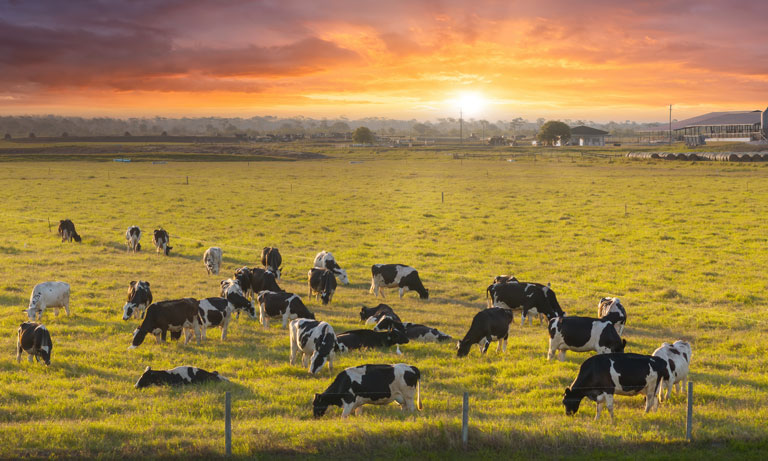
Spring brings new growth, warmer days and the promise of improved grazing. For livestock farmers, however, the change of season also brings a shift in animal-health risks.
The first rains, rapidly changing grazing conditions and sudden dietary changes can create ideal circumstances for poisoning, clostridial disease and other preventable losses. When livestock values are high, the financial impact of losing even a few animals can be substantial.
Spring management should therefore focus on prevention, observation and rapid action. Vaccination, sound nutrition, strategic trace-mineral supplementation and early veterinary diagnosis can all help protect livestock during this important transition period.
Some livestock diseases generally become less prominent during early spring, but “lower risk” should never be confused with “no risk”.
Conditions such as lumpy skin disease in cattle and bluetongue in sheep are generally associated with periods of increased insect-vector activity. Early spring may therefore represent a lower-risk period in many areas.
It is, however, an excellent opportunity to review vaccination programmes before vector populations increase.
Young replacement animals are particularly important. Animals entering the herd or flock without adequate immunity can become vulnerable when conditions become favourable for disease transmission later in the season.
The risk of redwater and tick-borne gallsickness (anaplasmosis) may also be lower during certain periods of spring, depending on the region, weather and tick population.
This does not mean tick management should stop. On the contrary, spring provides an important opportunity to assess tick-control programmes and pay particular attention to blue ticks.
Effective tick management needs to consider the farm’s specific conditions, resistance patterns, animal immunity and the acaricides being used. Poorly planned or excessive treatment can contribute to acaricide resistance, while inadequate treatment can leave animals exposed.
Heartwater deserves special attention because its epidemiology differs from that of some other important tick-borne diseases.
It is transmitted by Amblyomma ticks, and the nymph stage can play an important role in transmission. This means cases can still occur when farmers may not consider it the peak tick-disease season.
Animals should therefore continue to be monitored for signs of disease, particularly in heartwater areas.
One of the most dangerous aspects of early spring is the appearance of fresh green vegetation before adequate grazing has developed.
After months of dry winter conditions, livestock are naturally attracted to green plants. Unfortunately, some poisonous plants emerge quickly following the first rains and may be more noticeable and accessible than desirable grazing.
Hungry animals entering a camp can consume significant quantities before the farmer realises there is a problem.
Prevention begins with knowing your veld. Inspect camps after the first rains, identify potentially poisonous plants and avoid introducing hungry livestock into unfamiliar grazing.
Providing sufficient safe feed while the veld is recovering can also reduce the temptation to consume undesirable plants.
Where poisoning is suspected, contact a veterinarian immediately. Different toxins require different approaches, and guessing the cause can waste valuable time.
Spring showers can create another easily overlooked danger: urea poisoning.
Urea is widely used as a non-protein nitrogen source in ruminant supplements. When correctly formulated and consumed as intended, it can be a valuable component of livestock nutrition.
Problems can arise when urea-containing winter licks become wet. Rain can cause urea to dissolve and concentrate in portions of the lick or surrounding liquid. Livestock consuming excessive amounts can develop acute ammonia toxicity.
Urea toxicity can progress rapidly and should be treated as an emergency.
Farmers should protect urea-containing supplements from rain, inspect feeding points after showers and discard or manage spoiled feed according to professional nutritional or veterinary advice.
The transition from dry winter feeding to rapidly growing spring pasture can also affect the digestive system.
Clostridial organisms are widespread in the environment and, in some cases, normally occur within the gastrointestinal tract. Under favourable conditions they can multiply rapidly and produce extremely powerful toxins.
Pulpy kidney disease (enterotoxaemia) is an important example. Sudden changes to a richer diet can create conditions that favour rapid multiplication of Clostridium perfringens type D and toxin production.
One of the challenges with clostridial diseases is their speed. In some cases, the first sign a farmer sees is a dead animal.
That makes preventive vaccination far more effective than waiting for clinical disease to appear.
Spring can also bring an increased risk from diseases belonging to the gas gangrene or clostridial complex, including blackleg and malignant oedema.
Clostridial spores are remarkably resistant and can survive in the environment for long periods. Soil disturbance and changing environmental conditions can contribute to exposure.
Blackleg, particularly in young, rapidly growing cattle, can cause sudden death with very little warning. Once clinical disease develops, treatment may be difficult or unsuccessful.
Vaccination programmes should therefore be reviewed before the expected risk period. Speak to your veterinarian or animal-health professional about the appropriate clostridial vaccination programme for your farm and ensure booster doses are administered according to the vaccine label.
One of the costliest mistakes during a sudden-death outbreak is waiting to see whether another animal dies.
If the cause is infectious, toxic or nutritional, every hour spent guessing may leave the rest of the herd exposed.
Where an unexplained livestock death occurs:
Importantly, farmers should not open a carcass when anthrax is a possibility. Anthrax can infect people and opening a suspect carcass can contaminate the environment with long-lived spores. Sudden unexplained deaths should therefore always be discussed with a veterinarian before conducting your own post-mortem.
A confirmed diagnosis does more than explain the first death. It may prevent the second, third and tenth.
Get More from Your Vaccines: Strategic Trace Minerals and Herd Immunity
Spring is also an ideal time to think beyond simply giving vaccines and consider how well animals are physiologically equipped to respond to vaccination.
Farmers invest considerable money in vaccines, labour, handling facilities and time. Vaccination, however, doesn’t create immunity by itself. It presents antigens to the animal’s immune system, which must then mount an effective response.
That process requires nutrients — including essential trace minerals.
Trace minerals are required in relatively small amounts, but they play disproportionately important roles in animal health.
Zinc is involved in skin and epithelial integrity, enzyme systems and normal immune-cell function.
Copper contributes to antioxidant defence, immune function, connective-tissue formation and numerous enzyme systems.
Manganese is involved in antioxidant enzymes, metabolism, skeletal development and reproduction.
Selenium forms part of important antioxidant systems, including glutathione peroxidase, helping protect cells from oxidative damage.
Periods such as vaccination, weaning, transport, breeding, calving and disease challenge can increase physiological demands at exactly the time animals need to mount an effective immune response.
The Multimin range provides injectable trace-mineral supplementation designed to deliver key trace minerals directly to the animal.
Depending on the specific Multimin formulation registered for the species and market, products provide combinations of important trace minerals such as zinc, manganese, selenium and copper. Farmers should always select the formulation appropriate for the species and use it according to the registered label and veterinary advice.
Injectable supplementation has an important strategic advantage: it does not depend on short-term voluntary feed or lick intake in the same way as oral supplementation.
This can be particularly useful around predictable periods of increased demand.
It is important, however, to understand that Multimin is not a vaccine and does not replace vaccination, good nutrition or a properly formulated mineral programme. Rather, it can form part of a broader herd-health strategy aimed at ensuring adequate trace-mineral availability at critical times.
Research on injectable trace minerals containing zinc, copper, manganese and selenium has demonstrated effects on several aspects of immune and antioxidant function. Studies in cattle have reported improvements in certain vaccine antibody responses, immune-cell activity and antioxidant measures when injectable trace minerals were strategically administered.
Research has also examined their use around stressful events such as weaning and disease challenge, supporting the concept that strategic trace-mineral supplementation can be valuable when physiological demand increases.
A successful spring health programme is not based on one product or one intervention.
It is about building several layers of protection.
Good nutrition supports the animal. Strategic trace minerals support important physiological and immune processes. Vaccines prepare the immune system against specific diseases. Parasite management reduces unnecessary health pressure. Careful observation identifies problems early. And veterinary diagnosis ensures that, when something does go wrong, farmers act on facts rather than assumptions.
Spring should be a season of growth and opportunity — not preventable livestock losses.
Review vaccination programmes before high-risk periods, inspect grazing after the first rains, manage winter licks carefully, maintain appropriate parasite control and discuss strategic Multimin supplementation with your veterinarian or animal-health advisor.
The objective is simple: stronger animals, better-prepared immune systems and a herd ready to make the most of the season ahead.
Always use vaccines, supplements and veterinary medicines according to their registered label directions. Trace-mineral requirements and toxicity risks vary by species, diet and region, so consult your veterinarian or animal nutrition professional when developing a supplementation programme.

LUMPYVAX® (Registration G3673, Act 36 of 1947)
Each 1 ml dose contains:
10⁴ TCID₅₀ freeze-dried, live attenuated Neethling strain virus.
For more information, or if you have any concerns or need assistance with disease prevention, treatment protocols, or selecting the correct products, don’t hesitate to reach out to our resident livestock vet, Dr. Izak van Rensburg, at:
WhatsApp: 081 031 4694
Email: izakjvr@hotmail.com
Beskerm Jou Kudde Voordat Probleme Jou Geld Kos Die lente bring nuwe groei, warmer dae en die vooruitsig van beter weiding. Vir veeboere bring die
Dit word veroorsaak deur ’n pox virus wat permanente huidskade en skerp dalings in die vrugbaarheid en produktiwiteit van die kudde veroorsaak. Hoe kan jou
It is caused by a poxvirus that results in permanent skin damage and significant reductions in the fertility and productivity of the herd. How can
Inleiding Knopvelsiekte is een van die belangrikste erosiesiektes by beeste en alle ouderdomsgroepe word aangetas. Uitbreke van knopvelsiekte veroorsaak duisende rande se verliese vir veral
Please kindly complete the below form, so we can verify and ensure you are subscribed to the correct WhatsApp Group.