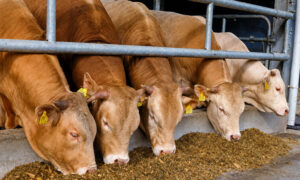
KNOPVELSIEKTE – ‘n belangrike erosiesiekte van beeste
Dit word veroorsaak deur ’n pox virus wat permanente huidskade en skerp dalings in die vrugbaarheid en produktiwiteit van die kudde veroorsaak. Hoe kan jou


It is common knowledge that worms or internal parasites cause production losses and even deaths in cattle and sheep.
Recent research has shown that worms, such as liver fluke, can cause between 0.1 kg and 1 kg weight loss per week depending on the level of infestation. Furthermore, these parasites can also cause a protein loss that has a dramatic impact on the animals’ immune system and fertility. Animals with limited protein levels cannot mount an adequate immune response to vaccines and will therefore be more susceptible to severe diseases and infections. The hidden impact is just as severe on reproduction, where intercalving periods are extended and the losses are not as visible as clinical diseases.
Adult liver flukes have a flattened, leaf-like appearance. Two species occur in South Africa, and one can distinguish between the common and the giant liver fluke. Fasciola hepatica, or the common liver fluke, grows to 30 mm in length, while Fasciola gigantica (giant liver fluke) reaches 75 mm in length. Liver fluke requires wet conditions to complete its life cycle because the intermediate host is small freshwater snails (Lymnaea spp.). These snails live in permanent or semi-permanent water sources, such as marshes, dams, or leaking water troughs.
The life cycle takes three weeks to complete but can be longer due to other factors. Adult liver fluke parasites are confined to the bile ducts in the liver where they feed on blood and proteins. The adult female lays eggs there, which are excreted with the bile into the intestinal tract and then in the manure. The eggs hatch on the pasture where they infect freshwater snails. Part of the development of the liver fluke takes place inside the water snail and is then excreted back onto the pasture.
At this stage, the liver fluke is not yet mature. Animals ingest these immature stages from the pasture, where they bore through the intestinal tract to migrate to the liver. In the immature stage, the liver fluke bores through the liver of the animal until it reaches the bile ducts, where it matures.


Knowledge of the life cycle is important for optimal and effective control of liver fluke. Animals become infected with immature liver fluke parasites when these small stages leave the water snails and contaminate the pasture.
The immature liver fluke parasites are shed from the water snails from late spring to early autumn. Most infestations in cattle and sheep occur from February to April. When the environmental temperature drops below 10°C, the freshwater snails burrow into the mud and stop shedding immature liver fluke parasites. Thus, the pasture becomes contaminated during late spring to early autumn due to the freshwater snail activity. When the temperature rises again and the rainy season begins, the freshwater snails reappear. These water snails then become infected with immature liver fluke parasites excreted by infected cattle and sheep in their manure.
Therefore, to break the life cycle and prevent the dramatic infestations in summer, it is critical to treat animals when the water snail is inactive. There are two specific times for strategic treatment: autumn or early winter—two weeks after the minimum temperature has dropped below 10°C—or late winter/early summer, just before or just after the first rains have fallen. Choosing a suitable anthelmintic with the correct control spectrum is of paramount importance. Most flukicides only control the adult stages of the parasite. As shown in Figure 1, various stages of the parasite occur at different times of the year in the animals. For the late winter treatment, the use of a drug that targets adult liver flukes will be sufficient. For treatment in autumn and/or midsummer, the use of a product that controls both adult and immature stages of the liver fluke is recommended.

Triclabendazole is a drug that kills both adult and immature liver fluke. The most optimal time to use this drug is during autumn (April). It can be repeated in spring for total control. Products containing closantel, rafoxanide, and oxyclosanide will kill adult liver fluke. The optimal time to use these products is June, August, and January. The advantage of these products is that they also control other parasites such as roundworms and nasal bot.
Producers should therefore be aware of the possible consequences of liver fluke and aim to apply the most optimal treatment. For more information, contact your nearest veterinarian.
Original article by Dr. JOHAN VAN RENSBURG, AFRIVET
For more information, or if you have any concerns or need assistance with disease prevention, treatment protocols, or selecting the correct products, don’t hesitate to reach out to our resident livestock vet, Dr. Izak van Rensburg, at:
WhatsApp: 081 031 4694
Email: izakjvr@hotmail.com
Dit word veroorsaak deur ’n pox virus wat permanente huidskade en skerp dalings in die vrugbaarheid en produktiwiteit van die kudde veroorsaak. Hoe kan jou
It is caused by a poxvirus that results in permanent skin damage and significant reductions in the fertility and productivity of the herd. How can
Inleiding Knopvelsiekte is een van die belangrikste erosiesiektes by beeste en alle ouderdomsgroepe word aangetas. Uitbreke van knopvelsiekte veroorsaak duisende rande se verliese vir veral
Introduction Lumpy Skin Disease (LSD) is one of the most important infectious diseases affecting cattle, and animals of all ages are susceptible. Outbreaks can result